
How to Get Court Records
Most Person County docket searching starts online. The Judicial Branch eCourts Portal posts public docket entries and public documents. Case details and hearing information appear there too. One caution matters here. The Portal is a public interface, not the official court record. The screen cannot answer every question. When it cannot, the state's court-records access guidance sends you to the clerk in the county where the case was filed. In Person County, that is the Clerk of Superior Court. It serves District Court and Superior Court within the North Carolina General Court of Justice.
Bring a usable identifier. The best request states the county, the case number, the division or case type, a party name, the document title or an approximate date, and whether you want a plain, certified, or exemplified copy. A vague ask such as "all records" leaves too much to sort out at the counter. Ask staff whether the item is public. Also ask how many pages it runs and how you can inspect or receive it.
- Search Portal by the available case or party information and note the case number and document or event date.
- If a remote search is incomplete, use the public terminal at the Person Clerk office for criminal, civil, special-proceeding, or estate searching.
- Ask the Clerk for paper-file inspection, a copy, certification, or exemplification, identifying the division and format needed.
- Confirm the components of the charge before paying. A mailed payment uses the local payment rules; counter payment has its own options.
- Keep the case number with the completed request so the returned copy can be matched to the correct Person County case.
Note: Clerk staff can walk you through records access and process. They cannot settle a litigation question or hand out legal advice.
Person County Portal Record Access
Inside the Portal, the Register of Actions works as the running index of a case. Open a file and you may see Case Events, Hearings, and Dispositions. Financial Information appears where it applies, along with public documents. That reach has a limit, though. The Portal is not a certified source. A search result may locate a filing. Even so, it can still fail when an agency or court demands the Clerk's certified copy. The official North Carolina court-records guidance lays out the state access route Person County follows.
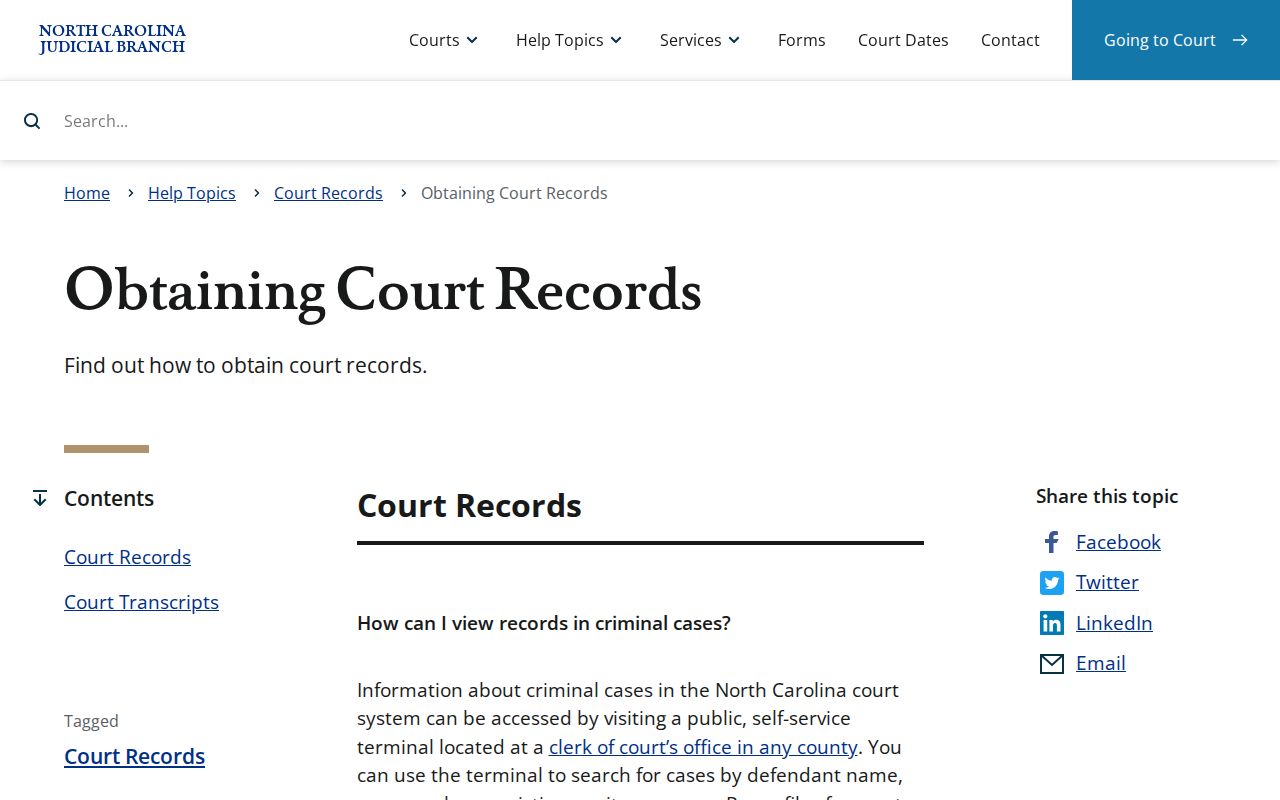
That layering keeps the distinction intact. Online access is one channel; the Clerk stays the local source for official copies and counter service.
Types of Court Records
Trial-court files in Person County have a home base. The Person Clerk serves as the local contact point for those records. A court record can take several forms. It may be a chronology of events, a filed document, a court order, or a certification the clerk issues. District Court and Superior Court cases may each follow a different path in Portal. So may clerk-administered special proceedings and estates. Even so, the Clerk office remains the right records contact.
- Register of Actions entries, which list the case’s dated procedural events.
- Criminal and civil filings, orders, judgments, and notices that are public and available.
- Special-proceeding and estate records searched through the Clerk’s public terminal.
- Plain copies, certificates under seal, and exemplifications issued through the Clerk when permitted.
- Audio-recording requests, which follow a separate form-based process and availability limits.
Not every government-held document counts as a court record. Deeds, marriage records, and most vital-record matters run through the Register of Deeds instead. Sheriff judicial-security materials and a prosecutor's own case work are no substitute for a Clerk-held trial-court file.
Court level matters too. District Court handles many criminal, civil, family, juvenile, and magistrate-connected proceedings. Superior Court takes felony matters, major civil cases, and jury trials. The Person County Clerk serves both trial levels. If a case climbs to the North Carolina Court of Appeals, its later appellate filing history sits in a different docket system.
Person County Court Records Counter
A Portal search can come up short. When it does, the public terminal at the Clerk office is the local fallback. Visitors can search criminal, civil, special-proceeding, and estate matters at the courthouse itself. Remember what the terminal is not. It is an access channel, not a promise that every record is open. The Clerk can explain the procedure for a public file. It can also describe the type of copy available.
At the counter, lead with the case number if you have it. No number? Give the party or business name as it appears in the court system. Add the likely division and an approximate date. A request for one specific order, judgment, or filing moves faster than a broad ask with no case or document reference behind it.
Person County Court Record Audio Requests
Audio does not come as a simple Portal download. Use Form G-114 to request a recording. It asks for the county, division, case name or file number, proceeding date, presiding judge or clerk, and courtroom. The form describes time-limited electronic delivery through LiquidFiles or a blank CD when available, with actual media cost. Juvenile and confidential recordings are excluded. Not every proceeding is recorded at all.
A transcript is a different product. The court-records guidance points transcript seekers to the court reporter or transcriptionist, whose rates are set individually. For a confidential proceeding, Form G-115 follows the court-authorized transcript route. None of this promises release. These steps set the access procedure only, and a requested recording or transcript may still be withheld.
Before asking about audio or a transcript, give the Clerk enough detail to identify the proceeding. A case name alone can be ambiguous. The case number, division, proceeding date, and courtroom point staff straight to the event. The forms also explain why a hearing entry on a Register of Actions should never be read as proof that a recording exists.
What a Court Record Contains
A Person County case display and the case file behind it are related. But they are different things. The Register of Actions gives you the timeline of entries. The file itself holds the pleadings, orders, notices, and other papers the court received or created. Public-access rules still apply. When you search, pair the record date with the case number instead of leaning on a party name alone.
| Case number | A unique identifier, such as the safe-format example 26CR000001-073, used to locate the Person County file. |
|---|---|
| Register of Actions | The dated case timeline, including entries that lead to hearings, dispositions, or later filings. |
| Filed documents | Public pleadings, motions, notices, and attachments when law and an order allow access. |
| Orders and judgments | Signed court actions that may be viewed online or requested from the Clerk. |
| Certification format | A plain copy, certificate under seal, or exemplification, depending on the purpose of the request. |
A broken document link does not automatically mean the file is closed to the public. Portal help materials flag error 141011 as a file too large to open. They note the Clerk may be able to split it into smaller files if that is feasible.
Person County State and Federal Records
Person County trial-court records live in the North Carolina court system. Authorized filers use File & Serve, the state's e-filing and service system. It is not a public case lookup. Above the trial courts sits the North Carolina Court of Appeals. Its appellate docket is separate from the Person County Register of Actions.
Federal cases are a different world entirely. The PACER pricing information from the federal judiciary covers only the federal docket. It has nothing to do with a Person County state case. The document system is federal too.
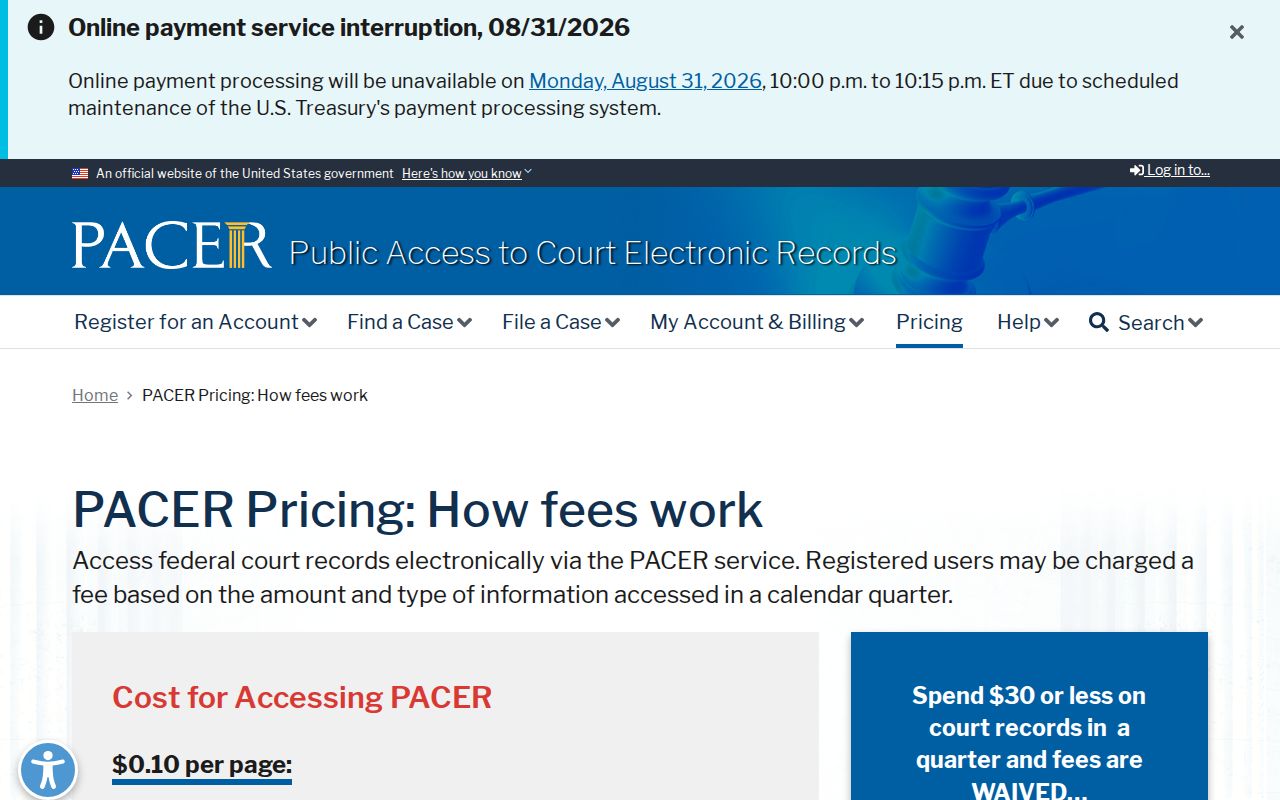
That fee framework is a federal rule through and through. Do not use it to guess the price of a Clerk-issued copy in Person County state court. The Middle District's CM/ECF information shows that federal electronic filing runs on its own platform with its own case conventions.
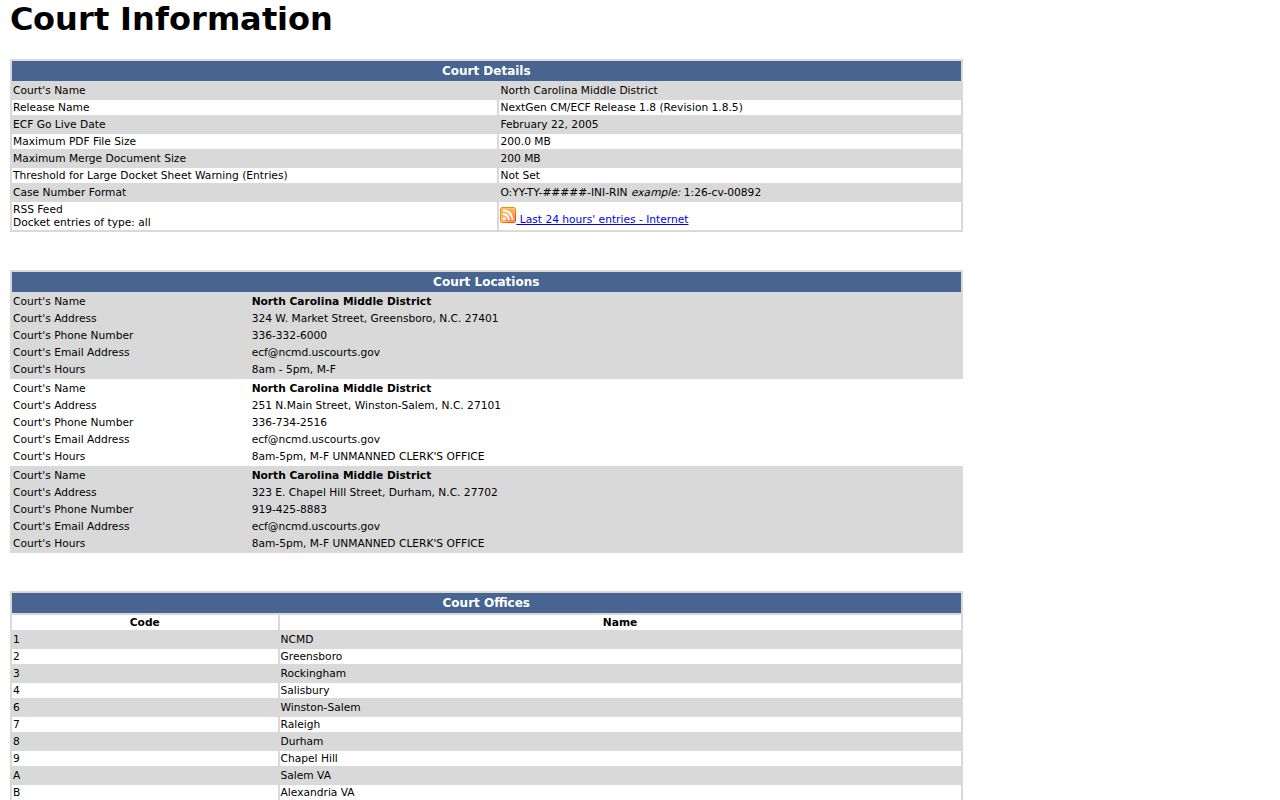
Pick the right court system before you request anything, or a state-court record request may land at a federal court, or the reverse. The federal court's document-access instructions lay out its route to electronic documents.
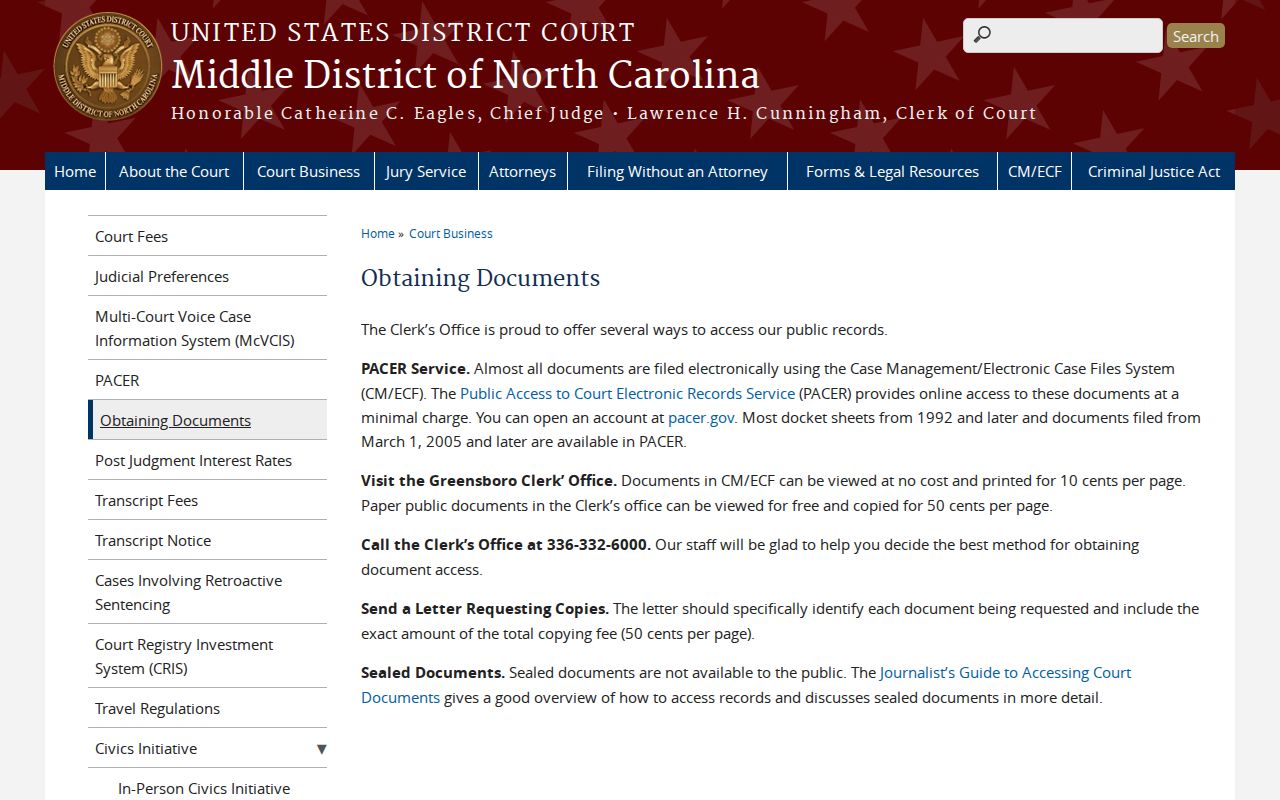
Those federal instructions matter only after you confirm the case is federal rather than a Person County General Court of Justice matter. Federal bankruptcy, criminal, civil, and appellate cases each carry their own identifiers and access rules. A Person County address alone settles nothing about which system applies. For a local state case, go back to Portal and the Person Clerk. For a confirmed federal case, use the federal court's own tools and document process.
Certified Copies and Fees
The January 2026 miscellaneous-cost chart breaks the charges into parts. Those parts are not one fixed final price. Page count, preparation, certification, exemplification, and format can stack in different ways. Confirm the total with the Person Clerk before you send payment.
A plain copy simply reproduces the public document you asked for. A certificate under seal and an exemplification are separate clerk services. Each has its own listed amount. Tell the Clerk why you need the record. Let the Clerk name the official copy available and the components that fit your Person County file.
| Item | January 2026 amount |
|---|---|
| Prepare first page of each document | $2.00 |
| Each additional page | $0.25 |
| Certificate under seal | $3.00 |
| Exemplification | $10.00 |
Person County Clerk of Superior Court
105 S Main Street
Roxboro, NC 27573
Main: 336-503-5200
Civil: 336-503-5201
Weekdays, 8:30 a.m. to 5:00 p.m.
Person County Court Record Payments
The Person County payment information splits mail from counter. By mail, pay with a money order or certified check. Cash and personal checks are not accepted that way. At the counter your options widen. You can use cash, a card subject to a fee, a money order, or a certified check.
Let the Clerk's directions on your actual request drive the payment. Before anything goes in the mail, verify the payee and the amount. Check whether the clerk needs more request details too. A Portal record may serve fine as a reference. A certification or exemplification demands the Clerk's official process.
Public Access and Sealed Records
North Carolina treats Clerk-maintained court records as public unless law forbids disclosure. That baseline has real limits, though. Juvenile records, expunction material, protected documents, and sealed files are not ordinary public records. A case number or a visible calendar entry never guarantees access. It does not open every document in the file.
North Carolina access rules.
G.S. 7A-109 makes Clerk-maintained court records public except where law prohibits disclosure and addresses dockets and electronic access.
G.S. 1-72.1 provides the process for a person asserting access to a sealed or closed civil court record or proceeding.
G.S. 132-1 is North Carolina’s general public-records baseline, subject to court-specific and confidentiality law.
These statutes build a framework, not a promise of release. Ask the Person Clerk directly whether a specific public record can be inspected or copied. When access to a sealed record is disputed, the statutory court process governs. Portal does not settle it informally.
North Carolina's confidentiality rules draw further boundaries. Juvenile court records are confidential under the applicable juvenile law. Expunction records get their own confidentiality treatment. Portal also masks some personal data and holds back protected material. A sound request names a known public file. Then ask the Clerk which access rule applies. Searching around a restriction another way is not the answer.